
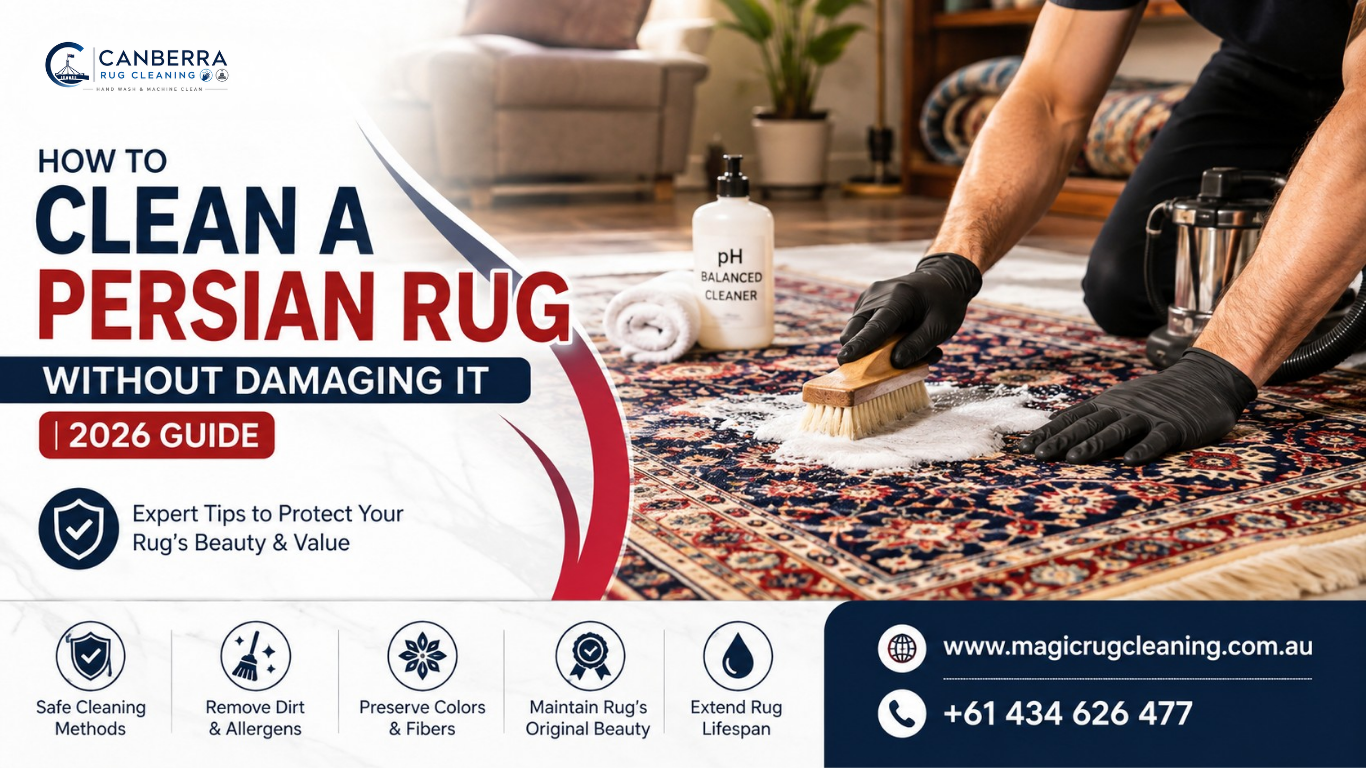
Cleaning a Persian rug means gentle vacuuming, hand-washing with a pH-neutral wool cleanser, and flat-drying away from direct heat. The key steps include dusting the rug first, testing dye stability, hand-washing in cool water, rinsing thoroughly, and drying flat to prevent shrinking or fringe damage. Never machine-wash or steam-clean a genuine Persian rug.
You spilled coffee on your grandmother's Persian rug. Now what? Grab the wrong cleaner and you could bleed the dyes, shrink the wool, or void whatever's left of the rug's value.
Persian rugs aren't like the carpet in your hallway. They're hand-knotted, often from wool or silk, and built to last generations — but only if they're cleaned the right way.
This guide walks you through exactly how to clean a Persian rug at home safely, when a DIY clean is fine, and when it's time to call a professional. Curious which mistake ruins most rugs in the first year? We cover that too.
Table of Contents
Why Persian Rugs Need Special Care
Regular carpet cleaning rules don't apply here. Persian rugs are hand-knotted from natural fibres, and that changes everything.
Most are made from wool, silk, or a wool-silk blend, dyed using techniques that can be sensitive to heat, harsh chemicals, and excess water. Push too hard and colours bleed into each other permanently.
- Natural dyes can run if water temperature isn't controlled
- Wool fibres shrink or felt under high heat
- Foundation threads weaken with harsh detergents
- Fringe and edges fray with rough scrubbing
A rug that's survived 40 years can be ruined in one bad wash. That's why hand-cleaning specialists like the IICRC recommend fibre-specific methods, not generic carpet shampoo.
Age matters too. A rug woven decades ago has already been through years of foot traffic, sun exposure, and previous cleanings. Each of those factors weakens the fibres slightly, so an older Persian rug generally needs a gentler touch than a newer one.
What You'll Need Before You Start
Gather these before you touch the rug. Rushing this step is where most DIY cleans go wrong.
- A soft-bristle brush or low-suction vacuum (no beater bar)
- pH-neutral wool wash or mild, dye-free detergent
- Cool, clean water — never hot
- A flat, well-ventilated outdoor space or large bathtub
- White cotton towels for blotting
- A soft sponge (never a stiff brush on knots)
Skip anything labelled "carpet shampoo" or "stain remover" from the supermarket. Most contain optical brighteners or bleach agents that discolour natural wool over time.
Step-by-Step: How to Clean a Persian Rug at Home
Follow this order exactly. Skipping a step is the fastest way to damage fringe or bleed colour.
How to clean a Persian rug in 6 steps: 1) Shake out loose dirt outdoors. 2) Vacuum both sides on low suction. 3) Test dye stability with a damp white cloth. 4) Hand-wash gently with cool water and pH-neutral cleanser. 5) Flush with a hose or clean water until it is clear. 6) Place the rug on a clean dry surface, out of the direct path of the sun.
1. Shake Out Loose Dirt First
Take the rug outside and shake it firmly, or beat it gently over a railing. This removes surface grit before it grinds deeper into the fibres.
2. Vacuum Both Sides
Use low suction with no rotating beater bar. Vacuum the front, flip it over, and vacuum the back too — trapped dust often hides underneath.
3. Test the Dyes First
Dab a damp white cloth on a hidden corner. If any colour transfers, stop — this rug needs a professional wash, not a home attempt.
4. Hand-Wash Gently
Mix a small amount of pH-neutral wool cleanser into cool water. Sponge it across the rug in the direction of the pile, never scrubbing in circles.
5. Rinse Thoroughly
Leftover soap attracts dirt faster than before you started. Rinse repeatedly with a hose or clean water until it runs completely clear.
6. Dry Flat and Fully
Lay the rug flat on a clean, dry surface away from direct sun. Elevate it slightly for airflow underneath. Full drying can take 24–48 hours.
Common Mistakes That Damage Persian Rugs
Even careful owners make these errors. Here's what to avoid.
| Mistake | Why It Damages the Rug |
|---|---|
| Steam cleaning | Excess heat and moisture shrink wool and loosen knots |
| Machine washing | Agitation breaks foundation threads and fringe |
| Bleach or strong detergent | Strips natural dyes and weakens fibres |
| Drying in direct sunlight | Fades colours unevenly over time |
| Scrubbing stains hard | Pushes stains deeper and frays the pile |
If you've already made one of these mistakes, don't panic — a professional wash can often reverse early-stage damage before it becomes permanent.
Not sure if your Persian rug is safe to wash at home? Get a free assessment from our Canberra rug specialists before you risk it.
How to Remove Stains and Pet Odours Safely
Fresh stains respond well to quick, gentle action. Old stains and pet odours usually need deeper treatment.
Fresh Spills (Wine, Coffee, Food)
Blot immediately with a dry white towel — never rub. Follow with a cool, damp cloth and mild wool cleanser, working from the outside in.
Pet Stains and Odours
Urine soaks into the foundation, not just the pile, so surface cleaning rarely removes the smell fully. This is where a proper hand-wash and rinse-out process matters most.
- Remove any excess water right away – do not scrub.
- Do not use ammonia-based cleaners – ammonia has a similar smell to urine for pets.
- Spot cleaning is not the best way to get rid of deep-set odors.
When to Call a Professional Rug Cleaner in Canberra
For light dust and new spills, DIY cleaning will be sufficient. Some situations need trained hands.
- The dye test showed colour bleeding
- The rug is silk, antique, or hand-knotted with high value
- Stains have set in for more than a few days
- There's a persistent pet odour after washing
- Fringe or edges show fraying or unravelling
Canberra's dry climate and dusty conditions mean rugs collect grit faster than in coastal cities. Professional Persian rug cleaning uses full-immersion hand-washing that lifts embedded soil without risking the dyes or foundation — something a home clean can't fully replicate.
Local specialists also know how to handle Canberra's seasonal dust storms and heating-season static, both of which drive grit deeper into rug pile than in milder climates. A proper inspection before washing catches problems — like weakened foundation threads — that aren't visible until it's too late.
How Often Should You Clean a Persian Rug?
Most Persian rugs in a family home need a full wash every 12 to 18 months, based on general guidance from textile care bodies like the EPA on indoor air quality and dust accumulation.
- Light foot traffic: every 18–24 months
- Households with pets or kids: every 12 months
- Entryway or high-traffic rugs: every 6–12 months
- Rarely-used rugs (guest rooms): every 2–3 years, plus regular vacuuming
Vacuum weekly between washes and rotate the rug every few months so wear and fading stay even across the whole piece.
Don't risk your Persian rug on a guess. Get expert hand-washing built for fine textiles.
People Also Ask
What is the safest way to clean a Persian rug?
Hand-washing with cool water and a pH-neutral wool cleanser is the safest method. It avoids the heat and agitation that damage natural dyes and hand-knotted foundations.
What is a Persian rug made of?
Most genuine Persian rugs are hand-knotted from wool, silk, or a wool-silk blend on a cotton or silk foundation. The fibres and dyes vary by region and age.
How do I clean a Persian rug at home step by step?
Shake out loose dirt, vacuum both sides on low suction, test the dyes, hand-wash gently with cool water, rinse thoroughly, then dry flat away from direct sun.
How do I remove pet odour from a Persian rug?
Blot excess liquid immediately, avoid ammonia-based cleaners, and treat with a full soak rather than surface spraying since urine soaks into the foundation.
Persian rug cleaning vs regular carpet cleaning — what's the difference?
Carpet cleaning uses steam and stronger detergents built for synthetic fibres. Persian rugs need cooler water, gentler cleansers, and hand-washing to protect natural dyes and knots.
What's the best way to clean an antique Persian rug?
Antique rugs are best left to professional hand-washing. Fragile dyes, worn foundations, and fibre age make home cleaning risky without specialist assessment first.
How much does professional Persian rug cleaning cost in Canberra?
Pricing typically depends on rug size, fibre type, and condition. Most Canberra specialists offer a free inspection and quote before any work begins.
Frequently Asked Questions
Q: Can I vacuum a Persian rug normally?
A: Yes, but use low suction with no rotating beater bar, and vacuum both sides regularly to remove dust before it settles into the base.
Q: Is it safe to use a carpet cleaning machine on a Persian rug?
A: No. Machine agitation and heat can shrink wool fibres, loosen knots, and cause fringe damage. Hand-washing is the safer method.
Q: Will washing a Persian rug make the colours fade?
A: Not if done correctly. Cool water, gentle cleanser, and shade drying protect colour. Hot water and direct sun are what cause fading.
Q: How long does a Persian rug take to dry after washing?
A: Usually 24 to 48 hours, depending on thickness and humidity. The rug should lie flat with airflow underneath until fully dry.
Q: Can I clean a silk Persian rug the same way as a wool one?
A: No. Silk is far more delicate and prone to water spotting and fibre damage. Silk rugs should generally go to a professional cleaner.
Q: What should I do if a stain won't come out?
A: Stop attempting DIY removal once a stain sets. Repeated scrubbing can push it deeper. A professional deep clean handles set-in stains more safely.
Q: Do Persian rugs need special storage when not in use?
A: Yes. Clean the rug fully before storing, roll it (don't fold), and keep it in a dry, moth-protected space away from direct sunlight.
Explore More About Persian Rug Care
Contact Magic Rugs Cleaning – Canberra’s most trusted rug experts
· Call Us: +61 434 626 477
· Email: skohistani50@gmail.com
· Website: magicrugcleaning.com.au
· GMB Profile: https://share.google/Ta43LVhDWki5BFkPy
· Support: Fast help with rug cleaning, repairing & restoring
No comments yet. Be the first!